30 Things I Experienced Working at a Non-Profit: The Introduction

30 Things I Experienced Working at a Non-Profit: The Introduction

Today marks the first day of the last month of my full-time position working at The Tiyya Foundation.  Leading up to this month, I have been thinking about all the ways I could summarize, recap, and easily define the past year, and nothing I brainstormed seem to do it justice.

My good friend, Nithin (his own 30 Days posts can be found on Medium) and I have reflected upon our lives thus far and the impending doom (we mean opportunities) that life will send our way.  We’re both in for quite a transition in the coming months and we decided it would be best to share our entire lives with the worldwide web.

Over the course of the next thirty days, I will be sharing snippets of my insights, experiences, and lots of emotional emotions I’ve felt through my work with Tiyya.  Some things will be serious, and some may be silly, but like life, all those of those things are necessary.  Even the seemingly insignificant moments are the ones that may stand out the most.

I challenge you to think about the things you have experienced this past year and share what you learn with the world.  Someone out there will thank you–I guarantee it.

Use the hashtag, #30days and let’s learn a little something together.

Day 1: A workplace is only as good as the people in it.

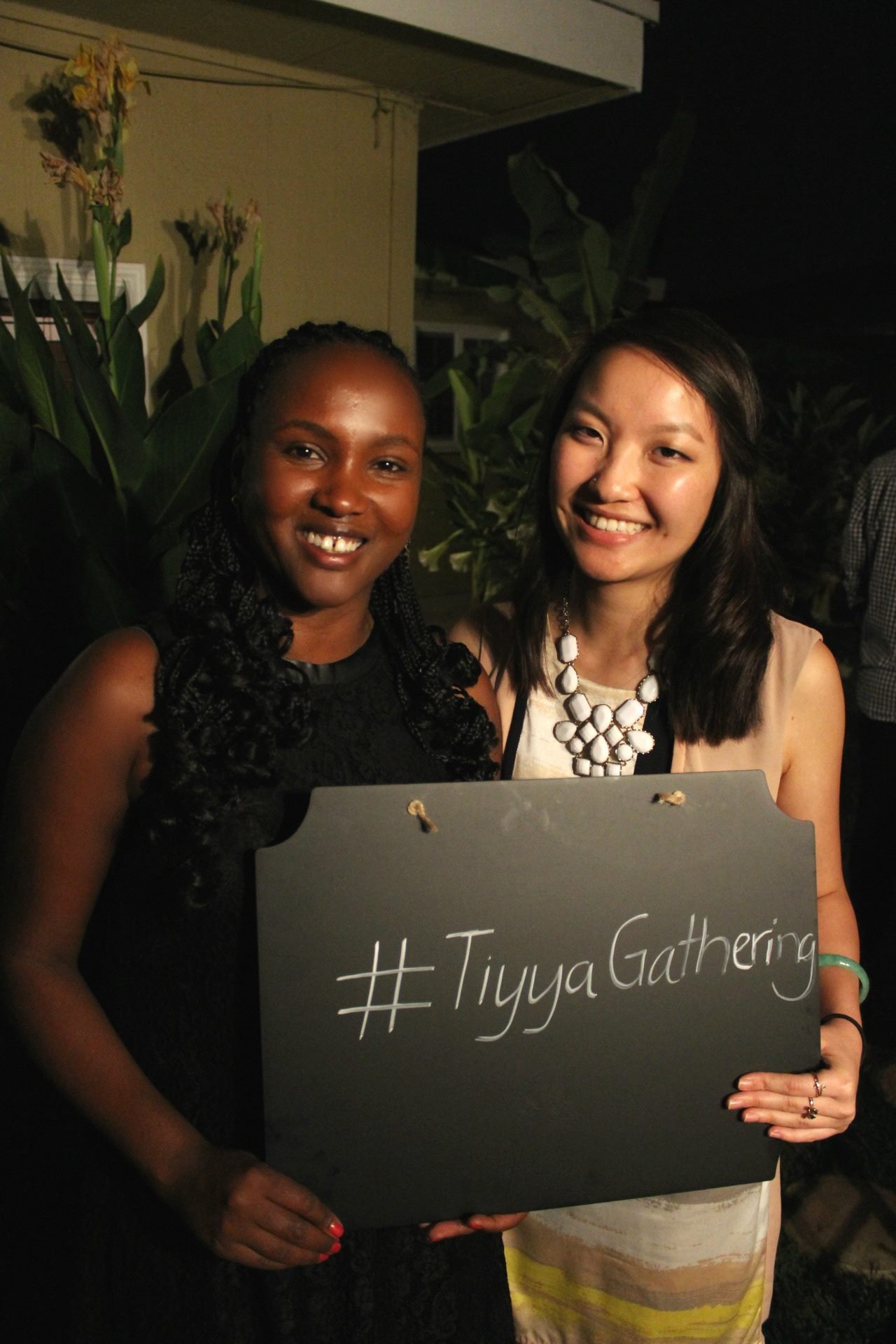
Meymuna + Christina

You could be a huge, mega-corporation with a butt-load of money, but if the people in your workplace are people you don’t enjoy being around (read: worse than a swarm of angry bee(yatches)), then you probably should not be in that workplace.

Every single person I met through Tiyya (volunteers, program participants, staff) have made working worthwhile and meaningful.  That’s how I know Tiyya is a great organization and will continue to thrive with or without me working there.

*cue tears + reflection time*

Until tomorrow, friends…

Magic Mic: On Periods and Policing Women’s Bodies

Magic Mic: On Periods and Policing Women’s Bodies

Weekends give me a lot of time to think and gather my thoughts about the host of issues we have in our world. Magic Mic Mondays is an opportunity to share my perspectives, vent frustrations, and cultivate discussions.

As a teenager, I got my period pretty late in comparison with my peers. And just like the time I said I wanted glasses because I thought they were cool, me wishing to get my period was one of the silliest things I could have wished for.

Despite mandated health classes in late elementary to middle school, no one really explained how periods work or why they’re important.   And even if they did, the information definitely did not stick. All I knew was that as soon as it happened, I’d probably get boobs. And that was the dream. Then, I’d grow armpit hair and be able to have children and maybe a boy would fall in love with me. Thanks, societal standards of beauty, for messing with my little kid brain. Things were a lot simpler then…or maybe just I was simpler then.

Anyway, even though I wanted a period before I got one, I am definitely not a fan of periods now. And it is not just because the idea of blood rushing out of my body scares me, even if it only is several teaspoons worth. But because what it means to get your period and the lack of discussion about menstrual cycles in general is extremely troubling to me.

I will wholeheartedly admit that I myself am part of the problem. I don’t even know if I have ever called a period a “menstrual cycle”, much less had an in-depth discussion about it with people who didn’t identify as women.

In public, I say “my aunt is visiting”.

You know, there goes Auntie Flo, at it again, with her inconvenient timing and “hanger”-inducing irritation.   I know women who refer to their cycle as a “dot” (pardon me, but it’s more like a flood or river coursing through…a dot just makes it sound so easy to deal with). And I know other women who just don’t speak of it altogether.

The feminist in me just thinks periods are like the patriarchy. It impacts literally everyone and we still don’t talk about it. And because of that, it holds every single of one us back.

I really would like to be like the women who celebrate their cycles and Mother Nature & the moon for what periods represent –the ability to create life. As joyful as it would be to just embrace being a woman and hopping on the “treat yourself” bandwagon with all of it’s period subscription box glory, I just don’t think periods are representative of that anymore.

And I think it’s problematic when that’s the only solution people can come up with. I mean it is great that there are companies who target women and want to make their periods easier to deal with. I think that does say a lot about where we are going as a consumer-driven society. Yes, we make a profit on women during some of their most vulnerable times, but at least we give them options!! Pads with wings, tampons, pantiliners, pads with no wings…the options are really endless. I’m bashing on those companies a lot, but really, I do think the availability of those companies and having others invest in them is important and it tells me that women do have more a voice in the marketplace.

But, being a feminist, and an inclusive one that at, means listening to other narratives and needs. And when menstruation holds young girls back from attending school*, is used as a tool to control and trivialize incarcerated women**, and shame women into thinking they’re not good enough at home or in the workplace, I don’t think it’s enough to simply say you should be proud to be a woman, buy a subscription-based box of menstruation goodies, and move on.

See, we’re quick to talk about the magic and fragility of birth, but get embarrassed or upset at the mere mention of a vagina.

And we’re quick to protect our unborn children, but not the vessels they grow in. (And the simple fact that we refer to women’s bodies as vessels is proof enough that we devalue women at every opportunity we get)

And even still, we make women pay a ton of money for feminine hygiene products, but give condoms out for free.***

So what can we do as a community to help alleviate these issues? How can we tell young girls not to be ashamed of their periods or empower women to believe that they too are deserving of access to safe and healthy ways of caring for their bodies? How do we stop belittling and humiliating women because their time of the month is gross and you just don’t want to think about it?

There is no one answer, but it’s about time that we started the discussion. Auntie Flo wants to stop being yelled at every month. She’s tired of being the scapegoat, and I’m tired of calling her out.

——-

*While menstruation and inadequate access to feminine hygiene products does heavily impact girls’ education around the developing world, it is not a quick-fix issue. Gender politics and women’s rights, in general, need to be discussed and handing out free pads to girls around the world is not going to be what solves gender-based discrimination in the education system and workplace.

**Dehumanization of inmates in prison, especially for female incarceration, is done through a variety of means. I could have an entire series of Magic Mics on the “criminal justice” system in the US and privatization of prisons. Withholding feminine hygiene products is just the cherry on top of a system that contributes to self-deprecation and hatred. A prison inmate in the link above describes it perfectly: “Prison makes us hate part of our selves; it turns us against our own bodies”.

***This is not to say I don’t think condoms should be free or not free. I think having fair and equal access to contraceptives is very important and completely necessary. But, the issue is that condoms often are accessible for free whereas feminine hygiene products (pads, tampons, menstrual cups, etc) are not and are, in my opinion, much more of a necessity.

Because There Can Never Be Too Many Self-Reflections

Because There Can Never Be Too Many Self-Reflections

It’s been a while, my friends.  I have neglected this blog, much as I have neglected caring for myself.

Maybe it’s a reflection of my priorities–myself always falling last on the laundry list of things I need to get done.  Because somehow, “self-care” is not something that appealing when I’m writing my to-do list.  It’s not enough syllables to sound important to me.

And now, 2015 is essentially half over.  Already.  And as astonishing as that is to me, it also isn’t surprising at all.  What is surprising is how much I have accomplished, and yet how little I feel like I have progressed (and how much I still make excuses for my lack of perseverance and direction in both my research interests & my “personal projects”).

When I graduated almost exactly one year ago, I was sure that I would make the most of my “last summer of freedom”.  I thought I’d find myself.  I thought something would find me.  I really don’t know what I talked myself into believing, but I really and truly thought that my life would somehow dramatically shift into adulthood and that things would just happen for me.  I also thought I’d stop making run-on sentences a regular occurrence in my writing.

As it turns out, none of that happened.

What I learned instead is that adulthood and post-graduate life is hard.  I even wrote a blog post about it. You’d think that would be enough to teach me.  But alas, dear friends.  I inherited my father’s wit, but not his foresight. (Shout out to my pops if you’re reading this.  Love you, babs…and as a sidenote, I have never called my father “babs” before, but I think he’d find it endearing.)

When people tell you that working life is hard, they are not joking.  It is equal parts exhausting and liberating and confusing.  Colleges should make How To Survive Being In A Full-Time or More-Than-Full-Time-If-You’re-In-Non-Profits Job 101 course a pre-requisite for graduation.  But that would be a whole lot of paperwork to enforce, so instead, we’re stuck learning life the hard way–by actually living it.

And it is not that I thought working full-time would be easy or smooth-sailing 100% of the time.  But I did not know how tired you can get.  And how easy it is to get derailed and not put the effort into caring about yourself and your aspirations because you’re just too tired all the damn time.  Because working an 8-5 job is not like the three different clubs and organizations you used to juggle like a pro.  You can’t do a job and fifty million side projects without getting burnt out.  You just can’t. And I think that when I realized that (and am still realizing that), it hurts for someone like me.  Because I am a somebody who gets excitement and a unique sense of euphoria and doing multiple things at once successfully.  Having to put projects that I am passionate about to the wayside gives me a really visceral reaction.  It is a very real, raw kind of hurt that I can’t really explain except that it feels like you’re breaking up with the person you thought you loved, but didn’t really because you’re thirteen years old and not Justin Bieber, so you don’t actually know what love is.  And again, there’s that run-on sentence.

Really though.  I think that when I realized how exhausting it is to try and accomplish everything all at once and be everything to everyone, you’re kind of left with nothing for yourself.

I’m slowly figuring out what really matters to me and how I can use my skills and interests to provide real, impactful change.  It’s hard, but so worth it.  I know that I would rather spend five years building something I’ve done the research on and I know won’t be detrimental to target communities than get my hands on everything I have a remote interest in.  I’ve done that and seen others do it before and I know how bad it can be for those you’re trying to help–including yourself.

And I know that one day, I will be a professor that cares and be so many things for so many people. (I’ll also get the damn chile pepper on RateMyProfessor… y’all know what I’m talking about.)  But until then, I am understanding that I can’t beat myself up over not being at a certain place or having accolades that I know others my age may have.

And maybe this summer I’ll finally experience the magical summer that Disney Channel always produces movies about, minus the musical numbers.  Maybe I will finish writing my book(s) or explore a new place by myself.  And I’ll surround myself with people who care and do good things and make me laugh.   I’ll stop striving for perfection and start embracing uncertainty.  And I will finally know what it means to care about yourself–that being selfish in this context is one of the most selfless things you can do.

Costa Rica Revisted. 2015 Global PEACE Program Initial Reflections.

Costa Rica Revisted. 2015 Global PEACE Program Initial Reflections.

I’m feeling a surge of emotions.  I think that happens a lot with me.

I’m happy, sad, and feeling an overwhelming sense of loss & purpose at the same time. I feel like one minute I could cry and the next, I’ll start laughing.  It’s like puberty all over again.

Going back to Costa Rica was a completely new and enriching experience for me. When you go to a place for the first time, everything is exciting.  All of your senses are soaking in new details.  But, when you return to a place, especially after some time — a year, in my case– different things happen.  You begin to analyze the things you never really noticed before.  You see a lot of good things that you saw before, but you also begin to evaluate other nuances.  It’s something I never really experienced before because I’ve never been to a foreign country more than once.  And out of the things I’ve learnt from this trip, I’ve learnt that revisiting places can be a very valuable and important thing.

I feel like I will say this about every place in the world I’ll travel to, but I can say with confidence that Costa Rica will always hold a very close and special place in my heart. I learned a good amount from the people I’ve met there and the friendships I’ve cultivated.  And, I’d be lying if I said I weren’t getting a bit emotional as I’m typing this whole thing.  I’ve only been in my apartment for less than an hour and I’m already dreading so many things that come with returning home from somewhere else.  I am thinking ahead–thinking of ways to return to my home away from home, to a place where I don’t think I’ve ever felt more at peace with myself and my place in the world, even when I don’t speak the language completely.

From Alajuela to San Jose to Caldera to Mastatal, each and every person I had the privilege of interacting with have given me so much strength and joy.  I am so grateful for the group of peacebuilders I worked with and to the many individuals I’ve met along the way.  I think of them and I am filled with so much happiness, and I know that that is what peace is.  That it is powerful and capable of doing so much good in the world.  Because what happiness I feel inside of me, I know I can use to motivate others around me.  It has shifted and guided me, even when I am 100% sure that I do not know what journey I will take to attain my goals in this world.

When I left, I told my peers that I did not want to go back to the US–that I did not want to return to reality. But, upon reflection, I know that sentiment to be flawed.  My reality is what I choose it to be.  Costa Rica is a lovely, wonderful, powerful reality for me.  I learned about peace as a system from professors and citizens alike.  I learned that demilitarization cannot be the only answer and that every government has its flaws, but that people everywhere are resilient, beautiful, unique humans.  And that gives me an amazing amount of hope about our world.  I am amazed at how at home I could feel in a foreign place from only being there for a short amount of time, and if I could feel that connected to people and places in less than two weeks, I am so excited to think of how much love can flow from person to person with more time than that.

I don’t know what will happen in my future, but I know that I am capable of doing and creating great things in the world so that others can learn what I have learnt and live purposeful, extraordinary lives.

All I know is that I will do everything in my own power to return to Costa Rica again, to work with and perhaps live amongst the families and friends I have met there, and to create a more peaceful & prosperous global community.

Even though I am thinking about my future and how I can return again to Costa Rica, I know that living too much in the future can do no good for our present.  Although it will be an internal struggle for me, I’m ready for today and cannot wait for the many tomorrows we all have to build a kinder world together.

With peace, love, and pura vida,

Christina

It Starts With This: A Microsoft YouthSpark Challenge For Change Winner’s Letter To You

It Starts With This: A Microsoft YouthSpark Challenge For Change Winner’s Letter To You

I love giveaways.

I have two entire email addresses dedicated just for subscribing to store newsletters and company giveaways & contests.

Even though the whole “luck of the draw” concept gets me excited, I never really expect to win anything. I don’t feel particularly lucky, nor do I know if I really believe in the concept of luck or fate.

But, I do believe in good ideas and the power of sharing those ideas. Maybe that’s what compelled me to apply for Microsoft YouthSpark’s first Challenge for Change competition one and a half years ago.

Or maybe I was procrastinating on studying for final exams and I found myself clicking the sidebar ads on Facebook that led me to the competition entry page.

Maybe it was a little of both.

I’ll just say it was a little of both.

I didn’t always think that sharing your ideas was a good thing. Giving your idea a public platform can put you in a very vulnerable place. You can be criticized, belittled, undermined. Honestly, I really should have been more afraid of applying for the competition. But, I wasn’t due in part to the fact that I honestly did not expect to win.

Fast-forward a month and I had become a finalist. I was ecstatic. I couldn’t believe that I had captured the attention of a panel of Microsoft employees who believed in my idea to bring peace education to primary school students around the world. Still, I did not think I deserved the attention or recognition that being a “finalist” in anything would bestow on someone. I wondered to myself why on earth anyone would pick me against the other young changemakers that applied.

A couple months later, four others and I won the competition. We were on our way to Kenya through the non-profit organization, Free The Children and their social enterprise, Me to We. That trip was an adventure I won’t soon forget.

After winning and going on an incredible journey, both physically and mentally, I realized several things:

First, it only takes an idea to change your life. Your idea may not give you global acclaim or make your crush like you back. But, if you believe in something strongly enough, you can change your entire world. And that’s something worth celebrating. I had no idea that the tangibility of peace education could impact my entire life, but it has. The idea took ahold of me and allowed me to develop a comprehensive understanding of social justice issues. It showed me that peace could give someone more hope and strength than any oppressive show of force could ever provide. Your idea, whatever it is, believe in it and run with it. You’ll be surprised at how much you grow from that little idea.

Second, the power of believing in yourself and having a supportive group of peers is instrumental for success. You may have doubts about your abilities, especially when there are many projects out there that are impactful and powerfully shifting mainstream narratives. But, I think that (a healthy amount of) doubts are only reminders to remain critical and analyze your ideas so that they can become the best they can be. Small doubts can eventually make you more confident if taken care of healthily. But, if you doubt too much, having a kind network of people that can tell you to relax every once in a while is extremely beneficial.

Third, don’t let competition consume you. If you become a finalist, you’re put up against a great group of changemakers who have equally as great of ideas as you do. Be confident in your abilities, but remember you are not the only person who matters. Remember that you are not special because you are a finalist or because you win something. You are special because you are one representative of the multitudes of people who do good in the world. I think the excitement that comes with winning a competition makes you think that you deserve recognition and praise over other people. Don’t let the idea of “winning” something tarnish your ability to see others’ ideas as something equally as wonderful as yours. Instead, empower others to understand your own goals and work to understand theirs. Solidarity is a strengthening thing. That’s why they call it solidarity.

Lastly, you are young. This competition is for youth, after all. Because you are young and because you now pressure yourself to take on the world, you will become burnt out. It is the nature of being an activist and visionary. That’s what you are, even if you don’t think it. Remember that as a visionary, your idea has the power to impact your entire being if you let it. Winning a contest is just the first step in journey to being all you want to be. It’s a beautiful journey and winning allows you to feel validated, but it can and will get tiring. Take a second and breathe. Let yourself witness all the amazing things that have come from your one idea, but don’t let it overwhelm you. You do not need to accomplish everything in one sitting. Let yourself make some mistakes and make sure you give a little bit of knowledge to someone else that wants their own idea to take flight. Even though you are young, you have a great deal of insight. Share it and do not be ashamed.

We are given great opportunities in this world. Microsoft YouthSpark’s Challenge for Change is one of those opportunities. This competition not only challenges us to think about ways to improve the world, but also challenges us to believe in the power of youth.   We are able to say that youth are not just our future, but also impactful solutionaries in our present. The Challenge for Change forces us to see that good ideas do not just come from traditionally educated adults, but also from children of all different backgrounds. And their ideas are being given a wonderful platform to grow and prosper. I have the competition to thank for my personal growth and fervent belief in peace as a powerful tool of change. I hope that you too will thank it for helping you develop your own idea for change.

If you are thinking about applying for this year’s Challenge for Change competition, do it. Who better to help mold a brighter, more compassionate and equitable future than you?

If you have an inkling of an idea about how to improve this planet we’re living on, share it with the world. We’re ready for you.

With peace & compassion,

Christina

Chinese Amer-I-can’t Deal With This Question Anymore

Chinese Amer-I-can’t Deal With This Question Anymore

I have been having issues as of late with the idea of ethnic and national identity. I have always considered myself Chinese American, or Asian American in broader contexts. I still think those labels define me adequately, and yet there is something very unnerving about the ways in which others react to my identity.

The most common question I get, right after “so, what ethnicity are you?”* is the dreaded, “You speak Chinese, right?”

I always smile a pained, forced smile and shake my head no.

That question is one of the most irritating, ostracizing questions I get. And I’ll tell you why.

That question constantly reminds me that I am out of place—that my fragmented identity is, in fact, a reality; that I am neither fully Chinese nor fully American; that no part of me belongs anywhere.

When a person asks me if I speak Chinese, they already assume they know the answer. They know how the conversation will go. They think I will say “yes”, that my parents or I immigrated to America fairly recently (within the past twenty years), and that I speak it at home. Maybe I’ll make a joke about a Chinese curse word or my parents’ inability to clearly enunciate the “l” sound. We’ll laugh and move on with our conversation.

But, the thing is, that is not how the conversation goes because that narrative is not my family’s or my own.

Assuming I speak Chinese automatically otherizes me in the eyes of the asker. If I speak Chinese, it makes sense to them. It’s as if they’re saying, “Oh, so you speak Chinese. You’re not really American—you’re Chinese.” And, if I speak honestly and say that I do not speak Chinese, at home or anywhere else, the immediate follow-up by the asker is when my parents immigrated to the United States. My own history and life is not the topic of conversation. My being born in America suddenly has no bearing on if I’m considered American or not.

My issue with this is not isolated or a standalone situation. America, a cultural melting pot (though now I think people are using the metaphor of some kind of mixed salad), has produced a generation, my generation, of people that are excluded from specific cultural contexts. The problem with being Chinese, but not Chinese enough; American, but not American enough, is a universal in the immigrant and descendants of immigrant community. You would think that after twenty-two years of living, I’d have come to terms with this state of limbo—of navigating between cultures and contexts. But, no matter how old you get, I think cultural identity is something you will always struggle with.

Further, aside from this personal struggle with identity, the question of native languages connotes the issue of belonging, which has historical proportions. Chinese immigrants were by no means welcomed with open arms. The denigration of the Chinese through dehumanization and exploitation of labor should not be taken lightly. Surviving in such an unwelcoming environment meant working as hard and as fast at becoming “American”. It meant blending in. And blending in meant speaking English and being as close to your white counter parts in dress, language, and mannerisms as possible.   It was the only way to escape the bullying and harassment that came with being a Chinese immigrant (or any immigrant, really).

It is why my father doesn’t speak Chinese fluently, and why my brother and I never learned. It is why growing up, I naively conveyed confusion and slight embarrassment that my mother’s mother never learned English after over forty years in the United States. It is why not one of her ten grandchildren can have legitimate conversations with her and why she still laughs at me when I struggle to convey affection in broken Cantonese. It is true irony when you uproot your family to find a better life, only to realize that that life includes ten grandchildren you can never communicate with.

In short, it matters a great deal to me that I cannot speak Chinese because it is a symbol and a symptom of the oppression of my ancestors, of the collateral damage we all have from being children of immigrants.

It is also a constant reminder that in my life, no matter how hard I try, I will never be Chinese enough or American enough to even the most well trained eye.

So, the next time you ask a question about speaking my mother tongue as some form of introduction by saying, “It’s curiosity. It’s just a simple question meant to spark conversation.” I will not smile and nod. I will be sure to tell you otherwise.


* I could dedicate an entire collection of blogs on this. The worst part about the “what ethnicity are you?” question is when people try to guess before you answer by running down the list of every single type of Asian ethnicity they can think of. And when you finally confirm one, they say, “I knew it!”

How on earth was it so glaringly obvious to you if you had to guess a number of different countries before you landed on the right one? It’s not that hard either—China is the biggest Eastern Asian country there is. You do not win a prize for boiling my ethnic and cultural identity down to a super fun guessing game.

What No One Tells You About Working in Non-Profits

What No One Tells You About Working in Non-Profits

or maybe they do, but you always thought they were exaggerating

A career in non-profits is unforgiving.

Being a part of the non-profit world is like that scene in Mean Girls, where Regina George compliments that one girl’s bracelet that was from her mom in the ‘80s even though she secretly thinks it is ugly and gross.

The outside world will throw compliments at you. They will say you are the most warmhearted, inspirational person for being able to be so self-sacrificing. They are thinking, however, that they could never live off of dollars a day. They are glad you are the self-sacrificing one so they don’t have to be.

It’s because people expect all non-profit workers to be selfless. It’s the thing at the top of every NGO job description, right under the tagline that reads “won’t make a ton of money, but it sure is fulfilling”. It’s the kind of thing that really draws in those optimistic, self-sacrificing “do-gooders”.

In the beginning, it’s kind of uplifting and nice that people—your friends, family, kind strangers you happen to talk to in line at the supermarket—call you “selfless” when you tell them you work for a non-profit.

They say, “Oh, I could never do that.”

And you think to yourself, “Well, yes, you could. You just choose not to.”

I must admit that I have thought that to myself so many times, even before I started officially working for a small, community-based non-profit. I will also admit that I would sometimes (read: every time) judge those who would not pursue a career in the non-profit sector or, even worse, take the stuffy corporate route. I’ve since changed my tune ever-so-slightly.


The thing is those people who say they could never work in non-profits are usually mostly right. They could probably never succeed in a non-profit, but not because of the reasons they’re thinking.

It’s not because it’s a selfless job that takes someone with a lot of optimism and altruism. That could be true in certain contexts, but not everyone working in a non-profit environment is optimistic or completely altruistic. I’ve met a good amount of realists who are doing quite well for themselves while working in NGOs, granted they are surrounded by a great deal of idealists that balance them out.

But in actuality, I think that the thing about working in non-profits that a lot of people could not handle is how completely unforgiving it can all be. It’s a thankless venture in many ways.


Yes, I may be a good person. Yes, I may be compassionate or caring. But simply chalking me up to being “noble” or “selfless” or simply “kindhearted” does a great disservice to those working in the non-profit sector. The amount of work, sacrifice, and effort it takes is completely overlooked when you gloss over it all with those simplifying terms.


Non-profit organizations are not selfless. They are tactical and smart, and the good ones are thrifty. They’re constantly in survival mode. Shouting about how kind and great you are won’t get things done. Compliments about how selfless an organization is won’t get things done. The large misconception about non-profits is in the title itself. Though we don’t function to make profit, we do need profits. Financial support is the best kind of support you can give a non-profit. And I think that a lot of times, non-profits are not given the amount of money they deserve, not because they’re unqualified or simply “selfless”, but because the amount of hard work, strategic planning, and foresight it takes to run or even just work in a non-profit is exceptionally overlooked.


Every single non-profit worker is forced to wear many hats. I don’t even like hats. They’re nice, but I look terrible in them. And still, you have to deal with it.

Those metaphorical non-profit hats you have to switch in and out of causes a lot of pressure.

It’s not to say that other jobs do not put you under pressure, but the pressure a non-profit worker is put under goes far beyond their job title.

In my case, it’s “Program Development Director”.

And, spoiler alert, I don’t just direct programs.

I am also a case manager, a tutor, an ESL instructor, an intern and volunteer supervisor, a storage unit organizer, a donation collector, an office administrator, and so many other things. I also make tea and eat lunch sometimes.

In addition to whatever basic job duties you might have with your job title, you have to shift and shuffle around every day because things need to get done. There is no extended budget to hire additional program staff. You cannot hand things off to someone else to do, because the worst thing that can happen isn’t just that your paperwork will pile up (which, trust me, is still is an awful thing to deal with). The worst thing that can happen is that an already underserved population will continue to be underserved. You can literally ruin someone’s life. And that is a ton of pressure.  Thanks a lot, hats.


Along with the physical responsibilities, you’re also put under the pressure of abstract things, like upholding your organization’s mission. Your existence starts to align with their existence. Their vision becomes yours, their mission becomes yours.

You are suddenly a walking, talking, breathing example of why your organization still needs to exist and why the problem you’re trying to tackle is an important one. You represent far more than anything you’ve ever represented before.

Damn those hats, at it again.


Being involved in NGOs, specifically in grassroots ones (though I’m sure the larger ones face similar challenges) is so excruciatingly difficult. Sometimes you feel like everything you do and work for is for naught. But, sometimes during rare moments of caffeine-induced clarity, a client expresses their sincere thanks or you finish a project without having to stop to do some other errand.

In those moments, you realize that you can be both a good, selfless person and a dedicated, talented, hardworking person. Those things are not mutually exclusive.

People don’t like to advertise how difficult it can be working in the non-profit world. I think that is a mistake.

I think it is also a mistake to romanticize the notion of doing good for a career. It takes perseverance, self-reflection, and the willingness to create and maintain healthy boundaries. It is not for everyone.

And, if you find yourself working in the non-profit sector and feel like it isn’t for you, that is okay. It is okay to admit defeat and find another way to support or help the cause. Admitting defeat does not mean you are selfish or lacking in compassion. It means you understand how difficult non-profits can be—that it is not just for the selfless and idealistic. More people need to realize that. Maybe then the already amazing work done by small non-profits can become even more amazing.